
LinkedIn Then vs Now

How a Digital Job Board Became the Internet’s Most Powerful Professional Platform
Nobody saw this coming in 2003.
A little startup launched out of a living room in Silicon Valley ended its very first month with just 4,500 members.
The idea was simple and, honestly, kind of boring on the surface: put your professional network online so people could find you.
Fast forward to July 2026, and LinkedIn has over 1.3 billion registered members across more than 200 countries. Three people join LinkedIn every single second. The platform generated $17.81 billion in revenue in fiscal year 2025, up 9% from the year before.
And it is no longer just where you go to find a job. It is where careers get built, ideas get debated, and professional reputations get made or broken in public.
How did a digital resume turn into the internet’s boardroom? That is the story worth telling.
LinkedIn Then: A Digital Resume Nobody Really Wanted to Use
Reid Hoffman founded LinkedIn in December 2002 with a premise that sounds obvious in retrospect but was genuinely unproven at the time. The internet had already shown it could connect people socially. Could it do the same thing for professional life?
The platform launched in May 2003. Job listings showed up in 2005. LinkedIn Recruiter, the enterprise hiring tool that would eventually become the platform’s biggest revenue driver, launched in 2008.
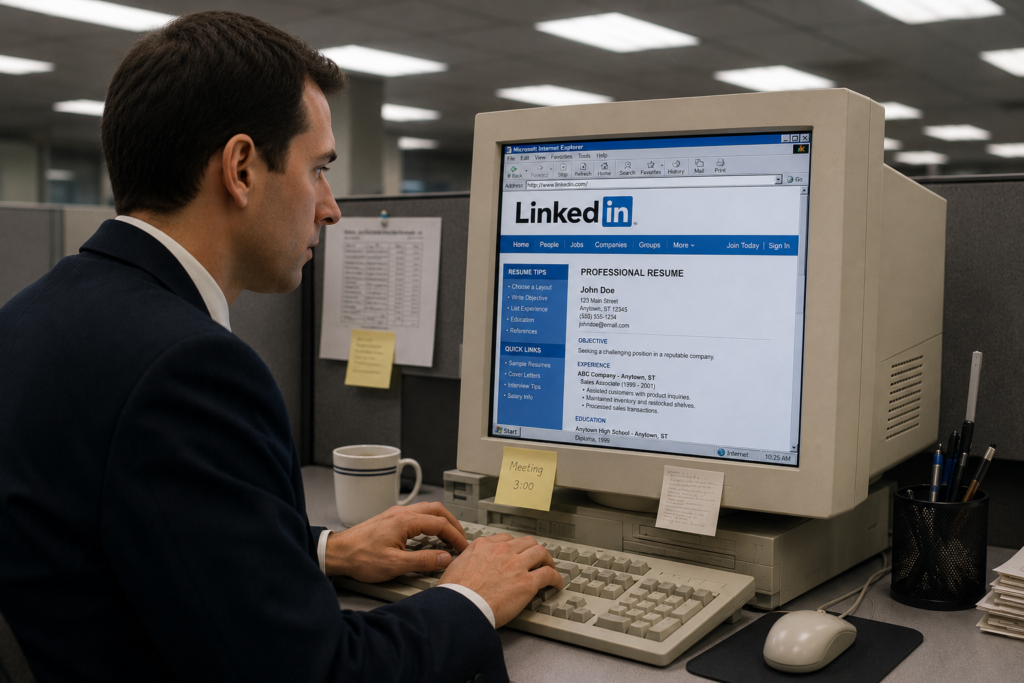
For most of those early years, the experience was exactly what you’d expect from a platform that nobody was excited about. The interface was sterile. The vibe was corporate in the least interesting way possible.
People used LinkedIn the way they used a filing cabinet. You put your stuff in there, you closed the drawer, and you went back to it when you needed something.
It was useful. It was not engaging. Nobody was building a following. Nobody was posting daily. The word “content” in the context of LinkedIn would have gotten you laughed at in 2006.
The Microsoft Acquisition That Changed Everything
LinkedIn went public in May 2011. The IPO was one of the most memorable of that decade, with the stock doubling on its very first day of trading.
The platform had 150 million members by then and was growing steadily, but it was still largely seen as a professional utility rather than a destination. You went there with a purpose. You left when you were done.
The real turning point came in June 2016, when Microsoft acquired LinkedIn for $26.2 billion, the largest acquisition in Microsoft’s history at that time. Satya Nadella was clear about what he saw in the deal.
LinkedIn was not just a hiring tool. It was going to become the professional operating system of the working world, woven into Microsoft Office, powered by data, and central to how people managed their careers across every stage of professional life.
That vision took a few years to materialize. But the acquisition fundamentally upgraded LinkedIn’s ambitions from “useful job platform” to “essential professional infrastructure.” The resources, the distribution, and the data access that came with Microsoft backing accelerated everything that came after.
When the Feed Took Over: LinkedIn’s Social Turn
This is the phase that nobody predicted and that changed everything about how the platform actually works.
Between 2017 and 2022, LinkedIn stopped being a resume repository and started becoming a social network. The shift was driven partly by product decisions:
LinkedIn introduced a richer content feed, native video uploads, article publishing, newsletters, and briefly, LinkedIn Stories. But the bigger shift was behavioral, and it came from the users themselves.
People started figuring out that the LinkedIn audience was unlike any other platform they had access to. On Twitter, you were fighting for attention against the entire internet. On LinkedIn, your post went directly into the feeds of decision-makers, recruiters, senior leaders, potential clients, and industry peers who were already primed to care about professional content.
Influencer culture arrived on LinkedIn, but it was a different kind of influencer culture. Not the kind built on aesthetics or lifestyle.
The LinkedIn version was built on expertise, credibility, and professional storytelling. Founders sharing what they had learned from failure. Sales leaders breaking down cold outreach frameworks. Marketers building real audiences with tactical content that actually helped people do their jobs better.
According to research from SuperGrow.ai, video content on LinkedIn saw a 36% increase in watch time year-over-year in 2024, with short-form video growing at twice the rate of every other content format on the platform combined.
In Q4 2025, LinkedIn confirmed three consecutive quarters of double-digit video upload growth. Video impressions rose 73.39% between 2024 and 2025, growing significantly faster than the number of videos being published. That is not a trend. That is a platform-level algorithmic shift that is still accelerating.
LinkedIn Now: What the Numbers Actually Look Like in 2026
The transformation from job board to professional social platform is not just a cultural observation. The data backs it up completely.
Here is where LinkedIn actually stands in 2026:
- 1.3 billion total registered members globally, with over 230 million in the United States alone
- 310 million monthly active users and approximately 134 million daily logins
- $17.81 billion in revenue for fiscal year 2025, with advertising revenue projected to hit $9.7 billion in 2026
- 175 million Premium subscribers in 2026, up from 154 million in 2022, a 51% increase in signups in fiscal year 2024 alone
- 3 new users joining every single second, adding between 5 and 8 million new members every month
- Carousel posts generating a 21.77% median engagement rate, roughly five times higher than text-only posts
- Only 1% of monthly users post content weekly, yet that small group generates 9 billion impressions
TechRT’s 2026 LinkedIn statistics report found that verified profiles on LinkedIn see up to 60% more views and 50% more engagement than unverified accounts. LinkedIn hit 100 million verified accounts by late 2025 and is aggressively pushing verification as a trust signal going into 2026.
The platform is now simultaneously a job board, a B2B advertising channel, a learning platform with 24,000 courses and 27 million learners through LinkedIn Learning, a newsletter publishing tool, a creator economy, a podcast host, and the most trusted professional content ecosystem on the internet.
93% of B2B marketers use LinkedIn for content distribution. Audiences that see both a brand’s awareness content and acquisition content on LinkedIn are six times more likely to convert compared to other platforms.
The Creator Economy That Nobody Planned For
The rise of the LinkedIn creator is perhaps the most unexpected part of this whole story.
In the old LinkedIn, posting content felt presumptuous. Who were you to share your thoughts? The platform did not reward it and the culture actively discouraged it.
That culture is completely gone now. According to The ScreenLight’s analysis of LinkedIn’s transformation, posting on LinkedIn is no longer viewed as self-promotion by most professionals in 2026.
It is increasingly seen as an extension of career development itself. Creator-brand partnerships on LinkedIn became three times more common between August 2024 and April 2025 alone.
Employee-generated content has become one of the most trusted formats on the platform, with Sprout Social’s 2026 Social Media Content Strategy Report finding that the number one thing consumers want from brands on LinkedIn is human-generated content, not polished marketing material.
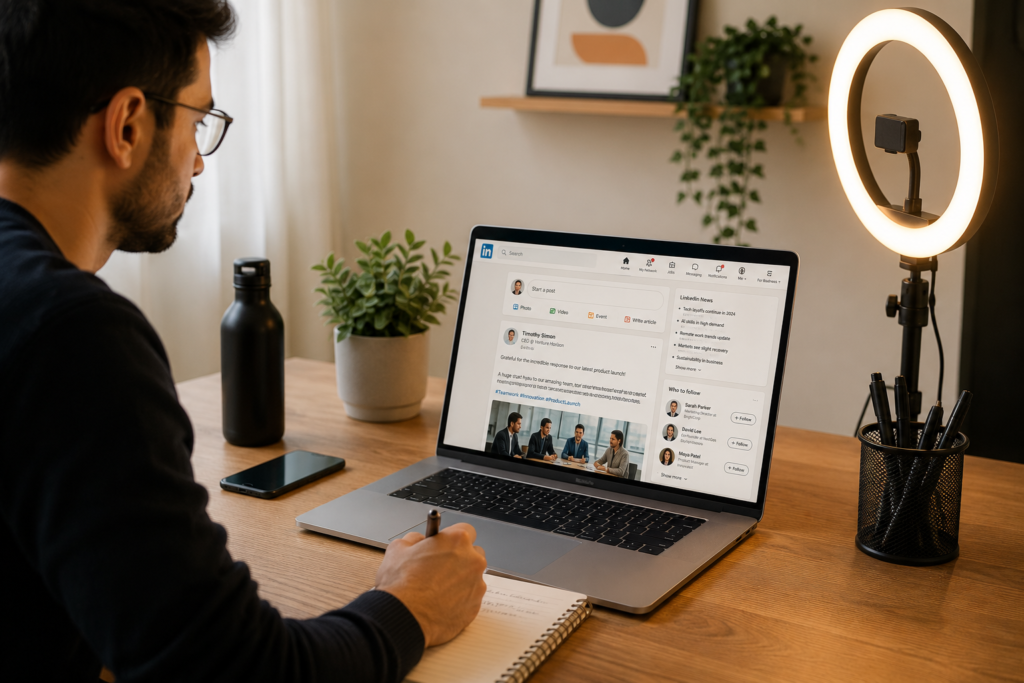
The algorithm in 2026 no longer just shows you content from people you follow. It actively surfaces content that matches your professional interests, your skills, and the specific challenges your role involves. It is trying to be useful, not just engaging.
What Got Lost in the Transition
Not everything about LinkedIn’s transformation is worth celebrating, and being honest about the downsides is part of telling this story accurately.
LinkedIn has developed a content culture that can feel deeply performative. The “I was fired and it was the best thing that ever happened to me” posts. The “humbled to announce” humble-brags.
The algorithmic pressure to post consistently has created a sameness of format and sentiment that is immediately recognizable and frequently hollow.
The platform’s shift toward content and engagement has also created significant noise in a space that was once refreshingly quiet.
Finding a job on LinkedIn today means navigating a feed full of content that has nothing to do with hiring. Recruiters compete for attention with thought leaders, brand accounts, and sponsored posts. The signal-to-noise ratio has deteriorated for people who just want to job search without being marketed to constantly.
The irony is real. LinkedIn set out to be the serious, professional alternative to casual social networks. Two decades later, it has the same engagement mechanics, the same influencer culture, and many of the same content problems as the platforms it was supposed to be different from.
The Bigger Story Behind All of This
LinkedIn’s evolution is really the story of how professional identity moved online and never came back.
Work was the last major domain that social media was supposed to leave untouched. Your job was private. Your career was yours.
The idea that you would build a public audience around your professional life, share your losses alongside your wins, and compete for attention with other professionals the way creators competed on YouTube would have sounded absurd to anyone in 2008.
But it turns out that where people spend 40 or more hours a week is exactly where they want to be seen, heard, and recognized. LinkedIn did not force that shift. It built the infrastructure for it, and professionals filled the room themselves.
The resume in the cloud grew a personality. And now it helps run the boardroom.
Whether that is progress or just the inevitable colonization of professional life by social media dynamics is a question worth sitting with. But the transformation is real, it is documented, and it is still happening faster than most people realize.
Three people joined LinkedIn while you read that last sentence.
Follow Knowledge Moniker for weekly breakdowns on digital platforms, business trends, and the ideas reshaping how we work, build, and grow.
Sources:


