

Shandong Iron Ore Prices Hold Despite Market Pressure

Iron ore markets do not do quiet. They spike, slide, recover, and reverse, sometimes inside the same trading week, driven by the push and pull between Chinese steel demand, global shipping volumes, and whatever Beijing decides to do about its property sector this quarter.
So when a key domestic producing region sends a signal of price stability, traders and buyers across China’s steel supply chain pay attention.
Right now, that signal is coming from Shandong.
Iron ore concentrate prices in Shandong province are holding steady and, in some cases, edging upward, even as broader commodity markets face pressure from weak Chinese steel demand and elevated port inventories.
The latest SMM pricing data shows 64-grade alkaline iron ore concentrates at Shandong mines and beneficiation plants quoted at 904 yuan per dry metric ton, up 18 yuan week on week, with steel enterprises raising their own prices in lockstep.
That number tells a story. Here is what is behind it, what is holding it up, and what could break the calm.
Why Shandong Is Not Just Another Mining Region
Before getting into the market mechanics, it is worth being clear about why Shandong concentrate prices matter beyond the province itself.
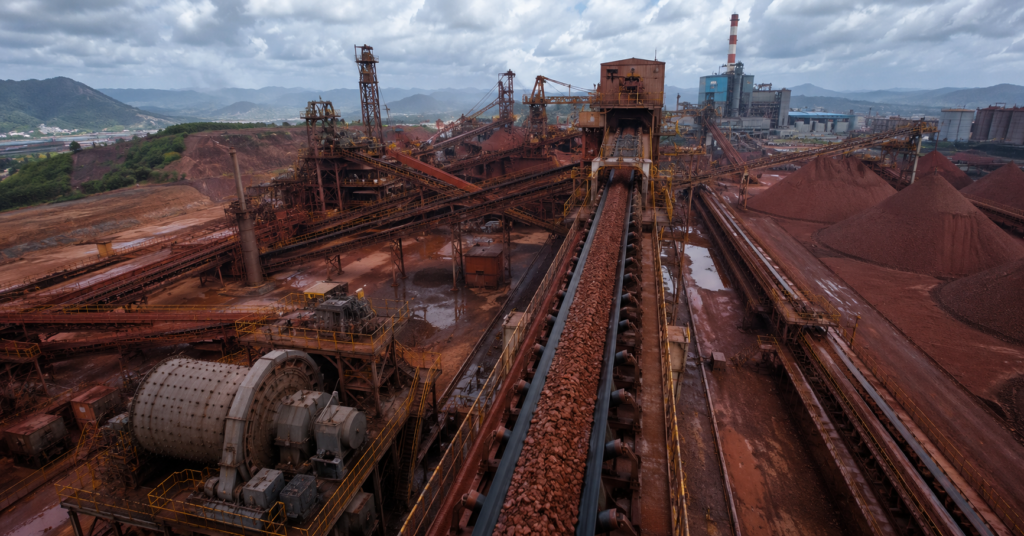
Shandong is one of China’s most significant domestic hubs for iron ore concentrate production. This is not surface mining for export. This is domestic concentrate.
A higher-grade, processed feedstock that goes directly into sintering and blast furnace operations at Chinese steel mills, primarily in Shandong itself and in neighboring Hebei, China’s largest steel-producing province.
The distinction between domestic concentrate and imported iron ore matters more than most Western coverage suggests.
Imported ore from Australia and Brazil, which makes up the majority of China’s iron ore supply, arrives as fines or lump ore requiring further processing. Domestic Shandong concentrate skips that step.
It feeds directly into the furnace, and in an operating environment where energy costs and processing efficiency matter to margins, that quality premium has real dollar value to the mills buying it.
According to IndexBox’s 2026 China Iron Ore Market Report, demand for iron ore concentrate in China is almost entirely derived from blast furnace pig iron production, with construction, infrastructure, automotive, and machinery manufacturing as the ultimate downstream demand drivers.
What Is Actually Holding Prices Up Right Now
Several factors are converging to put a floor under Shandong concentrate prices at the moment, and understanding each one separately is important because they are not all equally durable.
Steel Mill Purchasing Is Holding, But Carefully
Shanghai Metals Market (SMM) data from the most recent weekly brief shows that most Shandong and Hebei steel mills are currently maintaining normal production as planned, with no blast furnace maintenance shutdowns scheduled in the near term.
Mills are buying primarily under long-term agreements rather than spot purchases, and they are operating with lean inventories, buying on an as-needed basis rather than stockpiling.
That lean inventory posture is actually a double-edged sword for the market. It means there is no inventory build weighing on prices, but it also means mills have very little urgency to bid aggressively for spot tonnes.
Transaction volumes are moderate, not strong. The market is in equilibrium, not in demand-driven rally mode.
The Quality Premium Is Real and Holding
Shandong 64-grade alkaline concentrate carries a meaningful quality premium over the imported seaborne benchmark, and that premium has not collapsed even as seaborne iron ore prices have softened.
The reason is structural: the direct-charge capability of domestic concentrate saves mills a processing step, and in a margin-squeezed environment, that operational efficiency translates directly into purchasing preference.
This quality premium insulates Shandong domestic pricing from the full impact of weakness in the seaborne market, up to a point. When the price gap between imported fines and domestic concentrate becomes wide enough, mills will shift their purchasing mix.
That threshold has not been breached yet, but it is worth monitoring as Australian and Brazilian export volumes continue to run at high levels.
Supply Discipline Among Local Miners
Smaller mines and beneficiation plants in Shandong have not ramped up production aggressively despite the relatively stable pricing environment. Most are selling output as they produce it, running lean on inventory, and not rushing to add tonnes into a market where margins are already under pressure.
SMM’s weekly domestic iron ore brief confirms that overall regional concentrate supply in Shandong remains relatively tight, with most mines maintaining normal planned production rather than expansion mode.
Some mines are showing reluctance to sell at current prices, which has helped prevent the kind of inventory accumulation that typically creates downward pressure on spot pricing.
This is disciplined behavior born of thin margins, not confidence. But the effect on pricing is the same either way.
Iron Ore Futures Providing a Tailwind
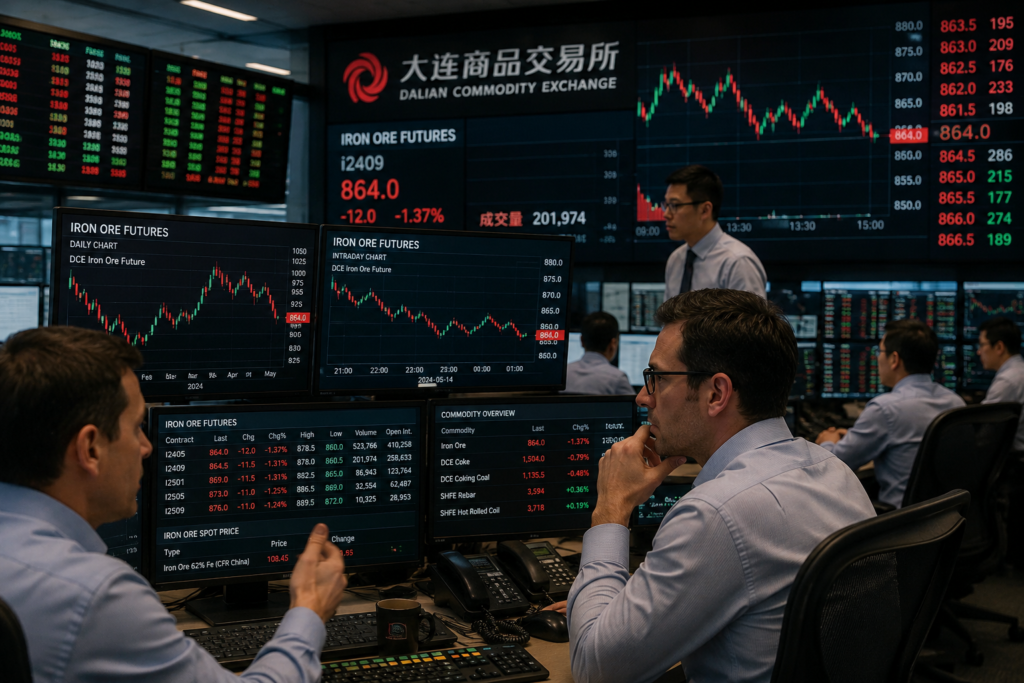
Iron ore futures on the Dalian Commodity Exchange have recently held up well with a strengthening trend, and this is providing a direct psychological and transactional tailwind for domestic concentrate pricing.
When futures firm up, mills feel less pressure to negotiate aggressively on spot purchases, and miners feel less urgency to discount in order to move material. The futures market is not driving domestic concentrate pricing directly, but the directional signal matters for sentiment.
The Real Risks Traders Need to Watch
Stability in this market is not the same as safety, and anyone buying or selling Shandong concentrate on the basis of the current equilibrium needs to understand what could break it.
Seaborne Iron Ore Supply Is Rising and Prices Are Under Pressure
The seaborne benchmark is not cooperating with the domestic concentrate stability story. According to ING Think’s iron ore market analysis, BHP has maintained its full-year 2026 production guidance at 258 to 269 million tonnes.
ING’s base case is iron ore averaging $95 per tonne for 2026, with Morningstar projecting a $80 to $100 per tonne range over the next 12 to 18 months.
Discovery Alert’s June 2026 market analysis notes that iron ore hit a 10-month low of $99.2 per tonne on June 26, 2026, down 7.9% from May, with portside inventories in China elevated and weekly steel consumption data deteriorating.
Chinese Steel Output Is Falling, Not Holding
This is the most important bear factor for anyone with a bullish view on Shandong concentrate prices. IndexBox data on China’s 2026 steel production shows that total steel production for the first four months of 2026 reached 331.12 million tonnes, a drop of 4.1% from the same period last year. That is not a rounding error. That is a structural decline driven by persistent property sector weakness and declining export margins.
Fewer tonnes of steel produced means fewer tonnes of iron ore needed, and the mills that are running are running cautiously, with lean inventories and a strong preference for negotiating rather than paying prompt prices.
China’s Property Sector Remains a Slow-Moving Drag
The structural story has not changed. China’s property sector is in a slow-motion restructuring. New construction starts are down. Financing for new projects is constrained. Infrastructure spending is providing some offset, but it is not enough to replace the construction-grade steel demand that the property sector generated at its peak.
The baseline assumption for most analysts covering the iron ore market is that this property sector drag continues throughout 2026, holding a ceiling over steel demand recovery and limiting the upside for domestic concentrate prices regardless of near-term supply discipline.
What This Means for Buyers and Sellers
For Iron Ore Concentrate Buyers:
The current pricing environment is the kind of window that procurement teams should be thinking about strategically. Prices are not surging, supply is not contracting sharply, and the directional pressure over the medium term is more likely downward than up. Securing volumes under long-term agreements at current levels carries less risk than waiting for a demand recovery that may not materialize in 2026.
For Domestic Miners and Concentrate Producers:
The message is straightforward: operational efficiency is the only lever available in this margin environment. Volume maximization into a market where mills are buying on as-needed basis and where seaborne competition is intensifying is not a winning strategy. The mines running lean and selling promptly at current prices are making the right call.
For Market Watchers and Traders:
The key signals to track are Hebei mill utilization rates, Dalian iron ore futures direction, and the spread between domestic 64-grade concentrate and the seaborne CFR Qingdao benchmark. When that spread tightens to the point where domestic concentrate loses its quality premium on a landed-cost basis, the pricing support disappears quickly.
Markets rarely hold still for long. The equilibrium in Shandong concentrate pricing right now is real, but it is fragile. The fundamentals supporting it are supply-side discipline and futures sentiment, not a demand recovery. Those are thinner legs than they appear.
Disclaimer: This article is for informational purposes only and does not constitute financial or trading advice. All market data cited is from publicly available sources as of July 2026. Commodity markets are volatile, always verify current pricing through primary market sources before making procurement or investment decisions.
Sources:
- Shanghai Metals Market (SMM) — China Iron Ore Brief: Shandong Prices Expected to Hold Up Well
- Shanghai Metals Market (SMM) — Shandong Iron Ore Concentrate Prices May Remain Volatile
- IndexBox — China’s Iron Ore Market Report 2026: Prices, Size, Forecast
- ING Think — Iron Ore Heads Towards a Softer Year
- Discovery Alert — Iron Ore Price Below $100: What’s Driving the 2026 Decline


