

Meta AI Glasses Price, Models, and Where to Buy

On June 23, 2026, Meta did something it had never done before.
It shipped smart glasses with its own name on the frame. Not Ray-Ban. Not Oakley. Just Meta.
For five years, the company hid its AI wearable technology inside borrowed brands, and it worked. Ray-Ban gave the product credibility. Oakley gave it an athletic audience. But after selling more than 7 million units in 2025 alone, Meta apparently decided it doesn’t need to borrow anyone’s name anymore.
What Changed With the 2026 Meta AI Glasses Launch
Before getting into the models, it’s worth understanding why this launch matters beyond just new hardware.
Meta announced three new frame styles on June 23, built on the same hardware platform as the second-generation Ray-Ban Meta, manufactured in partnership with Essilor Luxottica. The big headline was pricing: starting at $299, that’s $80 less than the Ray-Ban Meta Gen 2 at $379. Same core internals, lower price, Meta’s own brand on the frame.
The other major change is the AI. Every new Meta Glasses model ships with Muse Spark built in from day one. That’s the first AI model out of Meta Superintelligence Labs, and it’s a closed-weight, proprietary system designed specifically for wearable inference. It’s a genuine step up from the general-purpose Meta AI that powered earlier models.
Smart glasses without displays surged 167% year-over-year in Q1 2026, and Meta currently holds roughly 80% of the market. This launch is designed to cement that lead before Google and Samsung arrive with Android XR glasses later this fall.
The Three Meta AI Glasses Models in 2026
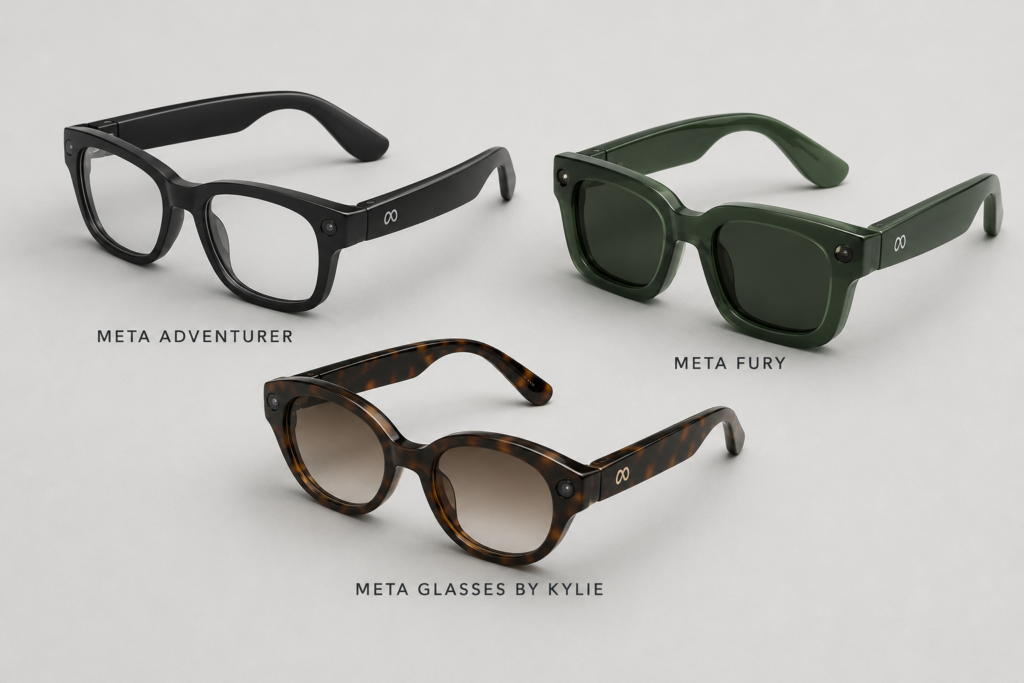
Meta Adventurer @ $299
The Adventurer is the most versatile frame in the new lineup. Meta describes it as a clean rectangle shape that works for everyday wear and suits a wide range of face shapes.
It’s available in both Standard and Large sizes, which matters more than it sounds; getting the fit right on smart glasses affects both comfort and how well the microphones pick up your voice.
If you want AI glasses that look like normal glasses first and tech product second, the Adventurer is the right starting point. It’s the closest thing in the lineup to the classic Wayfarer shape that made Ray-Ban Meta so popular, without the Ray-Ban price premium.
Price: $299 (base, before lens upgrades)
Sizes: Standard, Large
Best for: Everyday wear, first-time AI glasses buyers, wanna adventure with AI glasses
Meta Fury @ $299
The Fury is the statement piece of the lineup. Hands-on coverage from Engadget and The Verge consistently describes it as thicker, boxier, and more square than the Adventurer and as having a deliberately bold frame that makes a visual statement on its face.
Meta offers more color options on the Fury than any other model, so if you want a pair of AI glasses that actually reflects some personality, this is where that range lives.
The core AI hardware and specs are identical to the Adventurer. The choice between the two comes down almost entirely to aesthetic preference and face shape.
Price: $299 (base, before lens upgrades)
Sizes: Standard and additional options
Best for: People who favor bolder frames, streetwear-leaning style, and more color variety
Meta Glasses by Kylie (Starfire) @ $399
The Kylie edition, also referred to in some media coverage as the Starfire, is the most fashion-forward and most expensive model in the launch. Meta collaborated with Kylie Jenner on a slim oval frame inspired by the style she tends to wear personally.
The Starfire has a few exclusive touches that separate it from the Adventurer and Fury:
- A metal adjustable nose bridge instead of the standard plastic
- Kylie Jenner’s AI-generated voice as an optional assistant voice for onboarding, battery readouts, and interactions
- A special charging case that includes a mirror
- The gem on the lens, which is subtle enough that most people won’t notice it unless they’re looking for it
Bloomberg reported that the $399 price point positions this model specifically at a younger, fashion-focused demographic. The strategy is to use Jenner’s reach to bring in buyers who would never have searched for “AI glasses” on their own.
Price: $399
Sizes: Standard (slim oval frame)
Best for: Fashion-first buyers, Kylie Jenner fans, people who want an exclusive design detail
Full Specs: What You’re Getting Across All Three Models
All three Meta AI Glasses share the same internal hardware platform. Here’s what that means in practice:
| Spec | Meta Adventurer / Fury / Starfire |
| Camera | 12MP ultrawide, 3K/30fps video |
| Microphones | 5-mic array (some sources cite 6-mic), wind noise reduction |
| Speakers | Open-ear, spatial audio |
| Battery life | 8+ hours on glasses |
| Charging case | Adds up to 40 hours additional battery |
| Storage | 32GB onboard |
| AI | Muse Spark (Meta Superintelligence Labs) |
| Live translation | 20 languages (14 added at launch) |
| Display | None, audio and voice only |
| Prescription support | Yes, -12 to +2.25 SPH+CYL |
| Water resistance | IPX4 (splash resistant, not waterproof) |
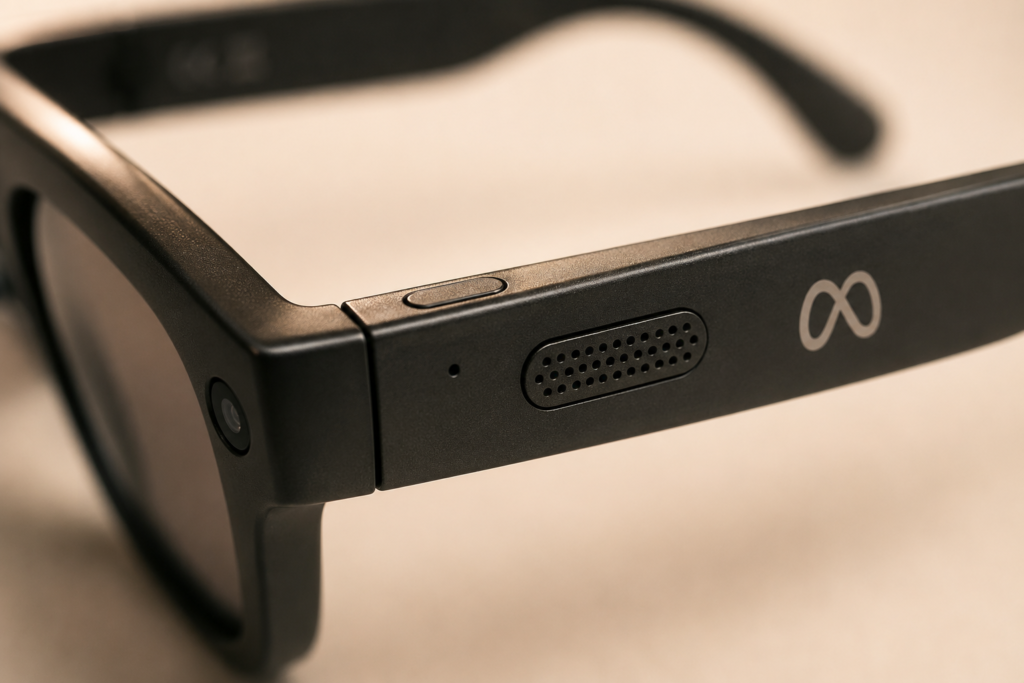
The one thing worth repeating: these are displayless glasses. Everything happens through voice commands, open-ear audio, and the companion app on your phone. There’s no screen in the lens, no AR overlay, and no visual output.
If you want a built-in display, that’s the Ray-Ban Meta Display at $799, a separate product that comes bundled with the Meta Neural Band wrist controller.
What Muse Spark Actually Does.
Muse Spark is the first AI model from Meta Superintelligence Labs, and it’s built specifically for wearable constraints, meaning it’s designed to deliver fast responses without draining your battery the way a general-purpose model would.
It operates in three modes: Instant, Thinking, and Contemplating, which balance speed against reasoning depth depending on the complexity of what you’re asking.
In day-to-day use, what that translates to:
- Ask it what you’re looking at and it tells you in real time
- Ask it to translate a conversation and it handles 20 languages live, including Mandarin, Japanese, Korean, Hindi, and Arabic (all added in this launch)
- Ask it a general question and it responds through the open-ear speakers without you touching your phone
- Upcoming: pedestrian navigation with turn-by-turn walking directions, no screen required
Meta claims Muse Spark matches Llama 4 Maverick’s capabilities at 10 times lower compute cost.
Lenses, Prescription Options, and Customization
One of the more practically important parts of this launch that doesn’t get enough attention is prescription compatibility.
All three Meta Glasses models support prescription lenses across the -12 to +2.25 range, covering a wide majority of people who need vision correction. Lens options include standard clear, sunglass, polarized, and Transitions photochromic. Prescription lenses add at least $100 to the base price, with additional costs for thinner lenses or photochromic options.
Meta also introduced an Rx Lens Swap program that lets you add prescription lenses through your own optician after purchase without voiding the warranty.
Across all three frame styles, there are 26 total color and lens combinations at launch, colors include Classic Black, Tortoise, Merlot, Racing Green, and others.
Meta AI Glasses vs Ray-Ban Meta: Which One Should You Buy?
This is the question most US buyers are asking right now, and the honest answer is simpler than the headlines make it sound.
What you’re actually choosing between is:
- The Ray-Ban name and Wayfarer design legacy vs Meta’s own branding
- $379 vs $299 (for the standard models)
- Ray-Ban Meta’s slightly more premium material feel vs the new Meta Glasses’ better fit adjustability
- Muse Spark (already available on new Meta Glasses from day one; being pushed via firmware update to existing Ray-Ban Meta units)
If you don’t have a Ray-Ban loyalty and don’t need the Wayfarer aesthetic specifically, the new Meta Glasses at $299 are the stronger value. You get the same AI, the same hardware, better fit customization, and more frame options for $80 less.
If you already own Ray-Ban Meta Gen 2, there’s not enough here to justify replacing a pair that still works fine. Wait for the next hardware generation.
The One Thing to Know Before You Buy
Everything above covers what these glasses do and how to get them. But there’s one thing worth knowing that Meta’s marketing materials don’t exactly lead with.
Dormant facial recognition code called NameTag is already installed in the Meta AI companion app, the same app you need on your phone to use any Meta glasses. A Wired investigation published June 4, 2026 found the code sitting in the app on more than 50 million devices.
This doesn’t mean you shouldn’t buy the glasses. Millions of people are using them for music, translation, hands-free calls, and photography without any issues. But going in with clear eyes about what the platform is and where its development is headed is just honest consumer information.
For more on the privacy dimension, check out our full breakdown of the NameTag controversy and what it means for wearables in 2026.
Disclaimer
This blog is written for informational purposes only. Prices, availability, features, and retailer stock are accurate as of the date of publication (July 2026) and may change without notice. Knowledge Moniker is not affiliated with Meta. The information is provided by the following sources.
Sources: Meta Official Announcement | Engadget Hands-On | Bloomberg | Memeburn Buying Guide | The Gadgeteer | TechTimes | Neowin | ReviewsTown | Deeper Insights | The Next Web | SiliconAngle | New Atlas


